

ABOUT BODY THERAPY
What Is Body Therapy
An introduction to body therapy and the topics you can read more about.
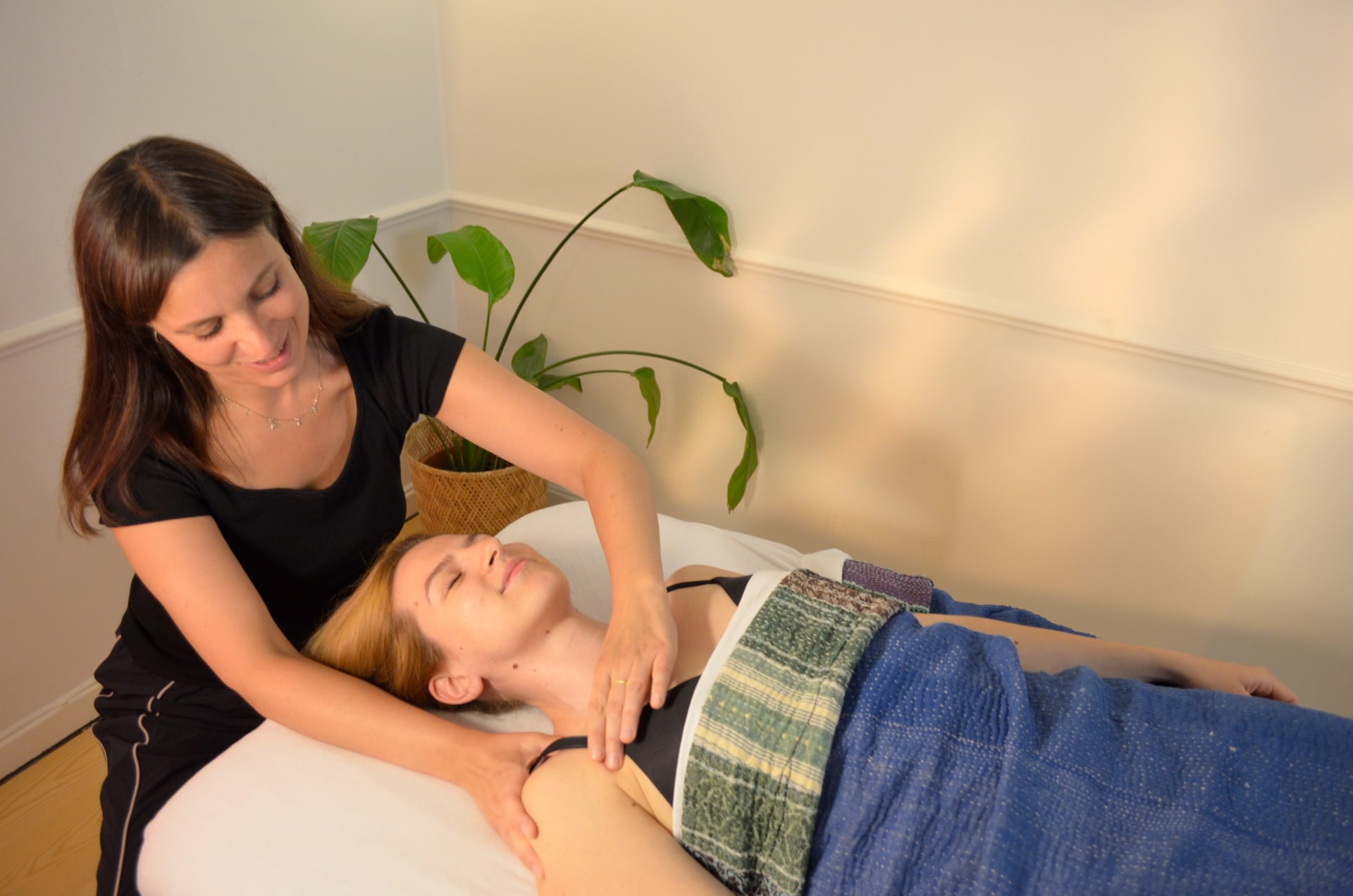
The body as a whole
Body therapy looks at the connection between the body, nervous system, thoughts and emotions, and how they influence the way we feel.
A session may include pressure and massage, rocking movements, stretches, breathing exercises and conversation.
Body therapy therefore does not focus only on the area where you feel tension or discomfort. We may also pay attention to your breathing, movement in the body and what you notice during the session.
Stress
When the body has been under pressure for too long
Stress can arise when the body and mind have been under pressure for too long. It may be caused by work, conflict, growing responsibilities or too little time for breaks and recovery over an extended period.
For many people, it is also connected to the feeling that they must keep meeting expectations at work, at home and in relationships. When demands continue to build, the body can eventually find it difficult to settle down again.
You may experience poorer sleep, tension in the jaw, neck or shoulders, headaches, restlessness, dizziness or tightness in the chest. These symptoms can have many different causes. If they are new, severe or unexplained, it is important to have them assessed by your doctor. Sometimes the body has been sending small signals for a long time, but we keep pushing them aside because daily life has to continue.
At some point, the body may begin to speak more loudly. This can feel overwhelming, especially if you suddenly cannot do what you normally do or if your body reacts in ways you do not fully understand.
Through rocking movements, pressure, touch and breathing, we work to slow the pace and create more contact with the body.
From there, we can begin to notice and understand signals from the body that may have been ignored or pushed aside for a long time. For me, the aim is not only to make tension disappear, but also to help you understand your body's signals better.
Back to Topics
The body often reacts before we understand why.
Anxiety and Restlessness
When anxiety is also felt in the body
Anxiety and restlessness are not felt only in the mind. They can also appear as constant unease in the body, such as a racing heart, tension, a knot in the stomach, tightness or restlessness in the chest, and a feeling that you can never fully settle.
Sometimes it begins with a thought that sets the body in motion. At other times, the unease appears in the body first and anxious thoughts follow. In this way, the body and thoughts can keep each other going in a cycle that makes it increasingly difficult to return to calm.
In body therapy, I work with the physical part of that cycle. Through touch, rocking movements, pressure and breathing, we work to slow the pace and create a greater sense of safety and contact in the body. When the body is not quite so alert, there may be more space between what you feel and how you respond to it.
Back to TopicsBody therapy works with both the physical and emotional aspects of how we feel.
Tension in the Body
When tension can have several causes
Tension can arise for many reasons. Some tension follows repetitive movements or physical strain. Other tension becomes more noticeable when we are tired, under pressure or holding a lot in the body.
What we are experiencing mentally and emotionally can also affect how the body feels. Sometimes we only notice how much we have been tensing when the body begins to settle. I am therefore curious not only about the tension itself, but also about whether something in your life or daily routine may be connected to what you feel.
I work with pressure, massage, rocking movements and stretches, and not necessarily only where the tension feels strongest. The body is interconnected, and sometimes it makes sense to explore other areas and the ways the body has adapted.
Back to TopicsTension is not always only about muscles.

The Menstrual Cycle and Hormonal Changes
When what you feel changes through your cycle and different stages of life
The female body changes throughout life. During the menstrual cycle, PMS, perimenopause and menopause, there may be times when the body demands more attention. You may experience menstrual pain, tension, changes in sleep, restlessness, tiredness or emotional shifts, and these may change from month to month.
In my sessions, I am therefore also curious about your cycle and whether there are patterns in what you feel. For menstrual pain or tension, I may include work on specific areas and pressure points traditionally used in Chinese medicine to support the menstrual cycle.
This does not mean that there is necessarily one specific explanation for what you feel. Instead, I use your body's signals, your cycle and what emerges during the session as different ways of understanding what may be relevant to work with.
Back to TopicsThe body can carry more than we are aware of.
After giving birth
When the period after giving birth feels like a state of emergency
The period after giving birth can feel like a state of emergency. In a short time, the body has been through pregnancy, birth and perhaps breastfeeding, while sleep, meals, breaks and the things that normally help us stay balanced may suddenly become very unpredictable.
Your baby's needs naturally take up a great deal of space, and it can be difficult to notice your own needs at all. Some women describe feeling far away from themselves or almost outside their own body. The body can feel unfamiliar after all the changes it has been through, while strong emotions, tiredness and an entirely new identity also need to find their place.
Motherhood can also come with many expectations. There may be an idea that you should be happy, present, full of energy and intuitively know what your baby needs. At the same time, we see images of the good pregnancy, the good birth, close bonding and a body that quickly returns to how it was. When reality feels messier, lonelier or more overwhelming, it can be difficult not to think that you are doing something wrong.
There may also be a great deal to navigate in relation to the body itself: how it looks, how it feels, hormonal changes, breastfeeding, tension, soreness and the experience that it suddenly belongs a little more to everyone else than to you.
In body therapy, the focus can be on you for a while. We can work calmly with the body, breathing and nervous system, making space for you to notice how you are actually feeling without having to perform, be a certain way or pursue a particular goal.
For me, the aim is not to return your body or you to who you were before. Pregnancy, birth and motherhood change something, and sometimes the way forward is not to go back but to move on. Together, we can be curious about the transition into this new role and about how you can find more calm, connection and safety in the body you have now and in who you are now.
Back to Topics
The Body as a Guide
Anger and Boundaries
When anger tells you that something does not feel right
Anger has not always been given much space, especially in women. Many of us grow up with the idea that we should be kind, accommodating and understanding, while anger is easily seen as difficult, unreasonable or even hysterical.
But anger is not necessarily something that needs to disappear. It can tell us that something does not feel right, that a boundary has been crossed or that a need has not been given space. Not expressing anger does not necessarily make it disappear. Instead, you may keep replaying the same arguments with your partner, colleague or family in your mind, or feel irritation, unease and tension without being able to put words to what is really taking up space.
Sometimes it can be difficult even to recognise your anger. Tears may come when you are actually angry, or you may mainly feel sadness even though frustration or a crossed boundary lies underneath. If you have received more understanding throughout life when you are sad than when you are angry, it makes sense that some feelings are easier to show than others.
In body therapy, we can be curious about how anger feels in your body. Your jaw may tense, your chest may tighten, your stomach may contract, or you may feel force or unease somewhere else. We can practise noticing the feeling and staying with it for a moment without having to push it away or act on it.
For me, the aim is not to make you angrier, but to create space for your full range of emotions. When we become more aware of how different feelings register in the body, it may become easier to recognise them. Anger can then help us notice where our boundaries are, what does not feel right, and what we need to say yes or no to.
Back to TopicsIt is not always necessary to be able to explain everything in words.
When Body Image Takes Up Too Much Space
When the body becomes something we constantly evaluate
Many of us learn early to look at the body from the outside. How does it look? Does it take up too much space? Does it look right in these clothes? Is the stomach too soft, are the thighs too big, are the breasts too small, or is the body simply not quite as we think it should be?
For some people, these thoughts take up so much space that they begin to limit life. Your mood may drop while getting dressed in the morning. You may find yourself avoiding fitting rooms, photos or certain activities because you don’t feel comfortable in your body as it is. Constantly seeing yourself from the outside can be exhausting.
The body may also change many times throughout a woman's life. Pregnancy, birth, breastfeeding, age, stress, the menstrual cycle and menopause can all change how the body looks and feels. If the aim is always to return to an earlier or more 'correct' version of the body, it can become difficult to be present in the body you have now.
In body therapy, we shift attention for a while from how the body looks to how it feels from within. The aim is not to make you love everything about your body, but to create a little more space between you and the constant evaluation. Over time, the body may be allowed to become more than something that must look right and become a place where you can notice your feelings, needs and boundaries.
Back to Topics